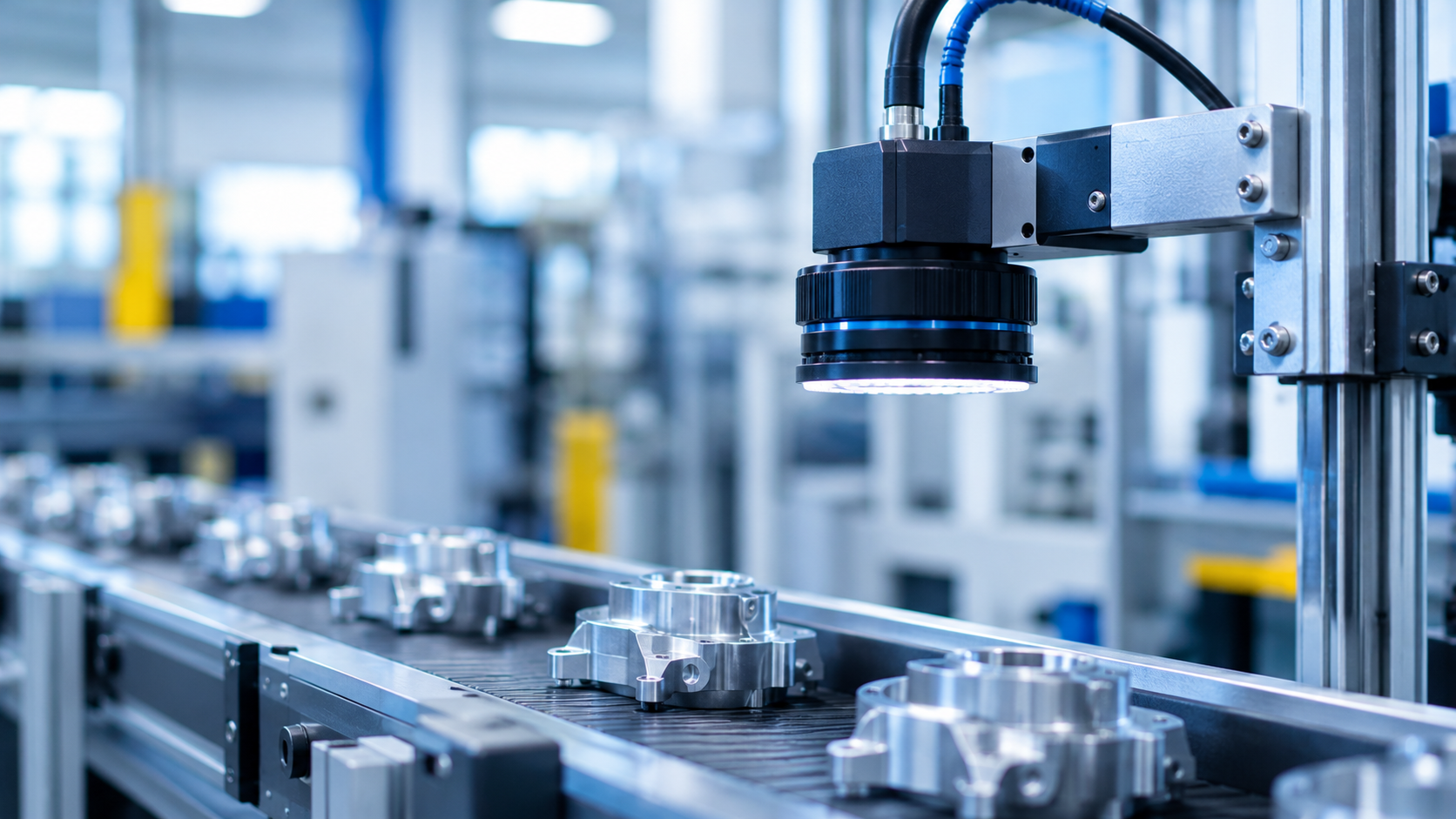
Computer Vision is rapidly becoming one of the most impactful technologies across modern industries.
By combining artificial intelligence, machine learning, cameras, sensors, and image processing technologies, computer vision enables machines to see, analyze, understand, and make decisions based on visual information.
For decades, organizations relied heavily on human operators for visual inspections, monitoring, quality control, security, and operational observation. Today, computer vision systems can perform these tasks faster, more accurately, and continuously at scale.
From smart factories and autonomous vehicles to medical imaging and retail analytics, computer vision is helping organizations improve efficiency, reduce costs, enhance safety, and drive digital transformation.
As industries continue investing in AI-powered operations, computer vision is becoming a foundational technology powering the next generation of intelligent enterprises.
What is Computer Vision?
Computer Vision is a branch of Artificial Intelligence that enables computer systems to interpret and understand visual information from:
- Images
- Video streams
- Security cameras
- Drones
- Medical scanners
- Industrial cameras
- Satellite imagery
- Mobile devices
Computer vision systems perform tasks such as:
- Object detection
- Facial recognition
- Image classification
- Defect detection
- Motion tracking
- Optical character recognition (OCR)
- Scene understanding
- Behavioral analysis
The technology allows machines to extract meaningful information from visual data and act upon it automatically.
Why Computer Vision Matters
Organizations generate enormous amounts of visual data every day.
Examples include:
- Manufacturing inspection images
- Security camera footage
- Medical imaging scans
- Retail surveillance videos
- Transportation camera feeds
- Fleet monitoring systems
- Drone inspections
- Infrastructure monitoring
Unfortunately, much of this visual information remains underutilized.
Computer vision transforms visual data into actionable intelligence that drives:
- Better decision-making
- Faster operations
- Improved accuracy
- Enhanced safety
- Greater automation
As labor shortages and operational pressures increase, computer vision becomes a powerful tool for improving efficiency and scalability.
Automated Quality Inspection in Manufacturing
One of the most common industrial applications of computer vision is automated quality control.
Traditional inspections depend on manual review processes that can be:
- Slow
- Inconsistent
- Labor-intensive
- Error-prone
Computer vision systems continuously analyze products on production lines.
Common Inspection Tasks
- Surface defect detection
- Product verification
- Assembly inspection
- Component validation
- Packaging inspection
- Label verification
Benefits
- Faster inspection speeds
- Improved product quality
- Reduced defects
- Lower production waste
- Improved customer satisfaction
Manufacturers can inspect every product instead of relying on sampling methods.
Predictive Maintenance Through Visual Monitoring
Equipment failures often provide visual warning signs before breakdowns occur.
Computer vision systems monitor machinery for:
- Leaks
- Corrosion
- Cracks
- Overheating indicators
- Wear patterns
- Abnormal movement
When combined with AI analytics and Industrial IoT sensors, computer vision helps identify maintenance issues before failures occur.
Benefits
- Reduced downtime
- Increased asset lifespan
- Lower maintenance costs
- Improved operational reliability
This approach shifts maintenance operations from reactive to predictive.
Workplace Safety Monitoring
Industrial environments often involve significant safety risks.
Computer vision helps improve workplace safety by automatically monitoring conditions in real time.
Applications
- Personal protective equipment (PPE) detection
- Restricted area monitoring
- Hazard identification
- Unsafe behavior detection
- Fall detection
- Worker proximity alerts
Benefits
- Improved safety compliance
- Reduced workplace injuries
- Faster incident response
- Enhanced operational awareness
Organizations gain continuous safety monitoring without requiring constant human supervision.
Warehouse & Logistics Automation
Modern logistics operations depend heavily on speed, accuracy, and visibility.
Computer vision enables warehouse operators to automate critical activities.
Applications
- Package identification
- Barcode scanning
- Inventory tracking
- Automated sorting
- Loading verification
- Shipment monitoring
Benefits
- Faster fulfillment
- Improved inventory accuracy
- Reduced manual labor
- Better operational visibility
Computer vision helps create smarter and more efficient distribution environments.
Retail Analytics & Customer Intelligence
Retail organizations increasingly leverage computer vision to understand customer behavior and improve experiences.
Applications
- Customer traffic analysis
- Shelf monitoring
- Queue management
- Product availability tracking
- Store performance analytics
- Loss prevention
Benefits
- Improved customer experiences
- Better inventory management
- Increased sales opportunities
- Enhanced operational efficiency
Retailers gain insights that help optimize both store performance and customer engagement.
Medical Imaging & Healthcare Diagnostics
Healthcare is one of the fastest-growing areas for computer vision adoption.
AI-powered imaging systems assist healthcare professionals in analyzing:
- X-rays
- CT scans
- MRI images
- Ultrasounds
- Pathology slides
- Retinal scans
Benefits
- Faster diagnosis
- Earlier disease detection
- Improved diagnostic accuracy
- Better clinical decision-making
Computer vision supports healthcare professionals by reducing workload and improving diagnostic confidence.
Smart Transportation & Traffic Management
Transportation agencies use computer vision to optimize mobility and infrastructure operations.
Applications
- Traffic monitoring
- Vehicle classification
- License plate recognition
- Incident detection
- Congestion analysis
- Smart intersection management
Benefits
- Improved traffic flow
- Reduced congestion
- Enhanced public safety
- Better transportation planning
Computer vision powers many of the intelligent transportation systems being deployed globally.
Autonomous Vehicles & Robotics
Autonomous systems rely heavily on computer vision to understand and navigate the physical world.
Applications
- Object recognition
- Lane detection
- Pedestrian identification
- Obstacle avoidance
- Navigation assistance
- Environmental mapping
Industries
- Transportation
- Warehousing
- Agriculture
- Defense
- Manufacturing
Computer vision serves as one of the primary perception technologies enabling autonomous operations.
Energy & Infrastructure Inspection
Inspecting critical infrastructure can be dangerous, expensive, and time-consuming.
Computer vision enables organizations to automate inspections using:
- Drones
- Fixed cameras
- Mobile devices
- Autonomous robots
Assets Monitored
- Power lines
- Solar farms
- Wind turbines
- Pipelines
- Utility infrastructure
- Facilities
Benefits
- Faster inspections
- Lower costs
- Improved safety
- Better infrastructure visibility
Organizations can monitor large-scale infrastructure more efficiently than traditional inspection methods.
Agriculture & Precision Farming
Computer vision is helping modern farms increase productivity while reducing resource consumption.
Applications
- Crop monitoring
- Disease detection
- Weed identification
- Harvest analysis
- Livestock monitoring
- Yield estimation
Benefits
- Improved crop health
- Better yield forecasting
- Reduced resource waste
- Increased profitability
Computer vision supports more sustainable and data-driven farming operations.
Computer Vision and Industry 4.0
Computer vision is a critical component of Industry 4.0 initiatives.
When integrated with:
- Artificial Intelligence
- Industrial IoT
- Data Analytics
- Robotics
- Edge Computing
- Digital Twins
organizations gain intelligent systems capable of making real-time operational decisions.
This creates connected environments where machines continuously monitor, analyze, and optimize operations with minimal human intervention.
Key Technologies Behind Computer Vision
Modern computer vision solutions often combine:
Artificial Intelligence
Enables learning and decision-making.
Deep Learning
Improves image recognition accuracy.
Machine Learning
Identifies patterns and classifications.
Edge Computing
Processes images in real time at the source.
Industrial Cameras
Capture high-resolution visual information.
Robotics
Act upon insights generated by vision systems.
Digital Twins
Visualize and simulate operational environments.
Together these technologies enable highly sophisticated industrial automation capabilities.
Challenges Organizations Must Address
Successful implementation requires careful planning.
Data Quality
Visual systems require high-quality image datasets.
Lighting & Environmental Conditions
Poor environments may impact performance.
Infrastructure Requirements
Video processing requires adequate computing resources.
Integration Complexity
Vision systems must integrate with existing operational technologies.
Cybersecurity
Connected vision platforms require secure architectures and monitoring.
Organizations that address these considerations early typically see stronger implementation outcomes.
The Future of Computer Vision
Over the next decade, computer vision will continue expanding across industries.
Emerging applications include:
Autonomous Factories
Production environments capable of self-monitoring and optimization.
AI-Powered Digital Inspections
Continuous automated inspections without human intervention.
Smart Cities
Connected infrastructure capable of real-time monitoring.
Intelligent Healthcare
Enhanced diagnostics and patient monitoring systems.
Advanced Robotics
Robots capable of understanding and responding to dynamic environments.
As AI models become more powerful, computer vision capabilities will become increasingly accurate, affordable, and scalable.
Computer vision is transforming the way organizations monitor, inspect, analyze, and optimize operations.
From manufacturing and healthcare to logistics, transportation, energy, agriculture, and smart infrastructure, AI-powered vision systems are helping organizations improve quality, increase efficiency, reduce costs, strengthen safety, and accelerate digital transformation.
As Industry 4.0 continues to evolve, computer vision will play an increasingly important role in enabling intelligent, connected, and autonomous operations across virtually every industry.
Organizations that embrace computer vision today will be better positioned to compete in an increasingly automated and data-driven future.